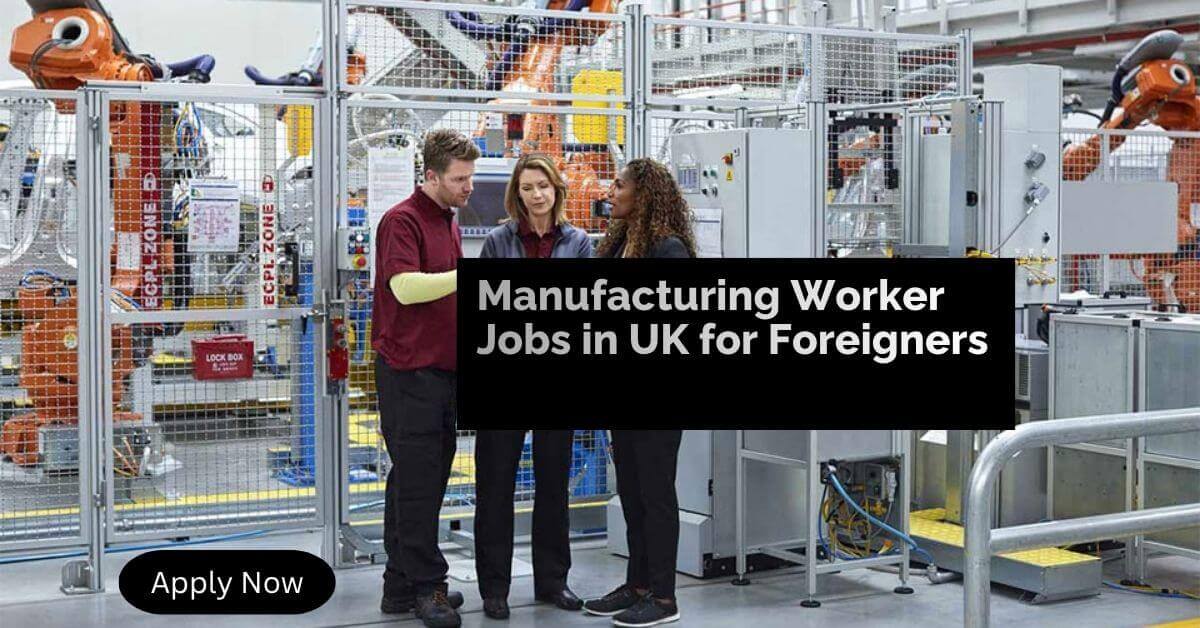
Manufacturing worker jobs in the UK for foreigners in 2026 provide stable employment opportunities in production, packaging, assembly, and machine operation sectors. These roles are open to overseas applicants through visa sponsorship pathways, especially in industries facing labor shortages. Salaries typically start from £9–£11 per hour for entry-level positions and can exceed £25,000 annually for skilled machine operators and experienced workers, along with benefits such as paid holidays, pensions, and career progression opportunities.
Why UK Needs Factory and Manufacturing Workers?
• Labor Shortage: UK factories face ongoing shortages in production, packaging, and logistics roles
• Industry Demand: Strong demand in food production, automotive, textiles, and electronics manufacturing
• Foreign Workforce Need: Employers increasingly hire non-EU workers through visa sponsorship programs
• Essential Sector: Manufacturing is a key part of the UK economy with continuous hiring needs
Eligibility & Requirements for Manufacturing Worker Jobs:
• Age Requirement: Must be 18+ and physically fit for factory work
• Communication Skills: Basic English for safety instructions and teamwork
• Work Authorization: Valid visa or employer-issued Certificate of Sponsorship (CoS)
• Experience: Entry-level roles require no experience, while machine operator roles may need prior skills
• Physical Ability: Ability to stand long hours, lift materials, and handle repetitive tasks
• Safety Awareness: Understanding workplace safety procedures is essential
Benefits of Manufacturing Worker Jobs in UK for Foreigners:
• Visa Sponsorship: Many UK employers offer Skilled Worker visa sponsorship for foreign applicants
• Competitive Pay: Entry-level wages start at £9–£11 per hour with overtime opportunities
• Job Security: High demand ensures stable and continuous employment
• Career Growth: Opportunities to move into skilled machine operator or supervisory roles
• Paid Leave: 28 days annual leave including public holidays under UK law
• Pension Benefits: Employer contributions to retirement savings schemes
• Training Programs: On-the-job training for skill development and advancement
• Multicultural Environment: Diverse workforce with international employees
Salary & Additional Benefits:
• Entry-Level Pay: £9–£11 per hour for general factory roles
• Skilled Roles: £25,000+ per year for machine operators and experienced staff
• Overtime Pay: Additional earnings available for extra shifts
• Benefits Package: Paid holidays, pensions, safety training, and performance bonuses
Types of Factory Roles:
• Assemblers: Assemble products and components in production lines
• Machine Operators: Operate and maintain industrial machinery
• Quality Inspectors: Check products for defects and quality standards
• Packaging Workers: Pack and prepare goods for distribution
• Warehouse Staff: Load, unload, and organize inventory
How to Get a Work Permit for Factory Jobs in UK?
• Find a UK employer licensed to sponsor foreign workers
• Receive a Certificate of Sponsorship (CoS) from the employer
• Apply for a Skilled Worker visa through the UK Home Office
• Submit required documents including passport, job offer, and proof of eligibility
• Wait for visa approval (usually 3–8 weeks processing time)
Check Also: Visa Sponsorship Production Supervisor Jobs in USA
Conclusion:
Manufacturing worker jobs in UK for foreigners in 2026 offer strong opportunities for overseas applicants seeking stable income, visa sponsorship, and long-term career growth. With high demand in factories and production industries, both entry-level and skilled workers can secure employment, gain training, and build a future in the UK industrial sector.
Frequently Asked Questions:
Do I need experience for manufacturing jobs?
No, many entry-level roles require no experience, but skilled machine operator roles may require prior training.
Can foreigners get visa sponsorship for manufacturing jobs in UK?
Yes, many employers offer Skilled Worker visa sponsorship for eligible candidates.
Do I need English for factory jobs in UK?
Basic English is enough to understand instructions and workplace safety rules.