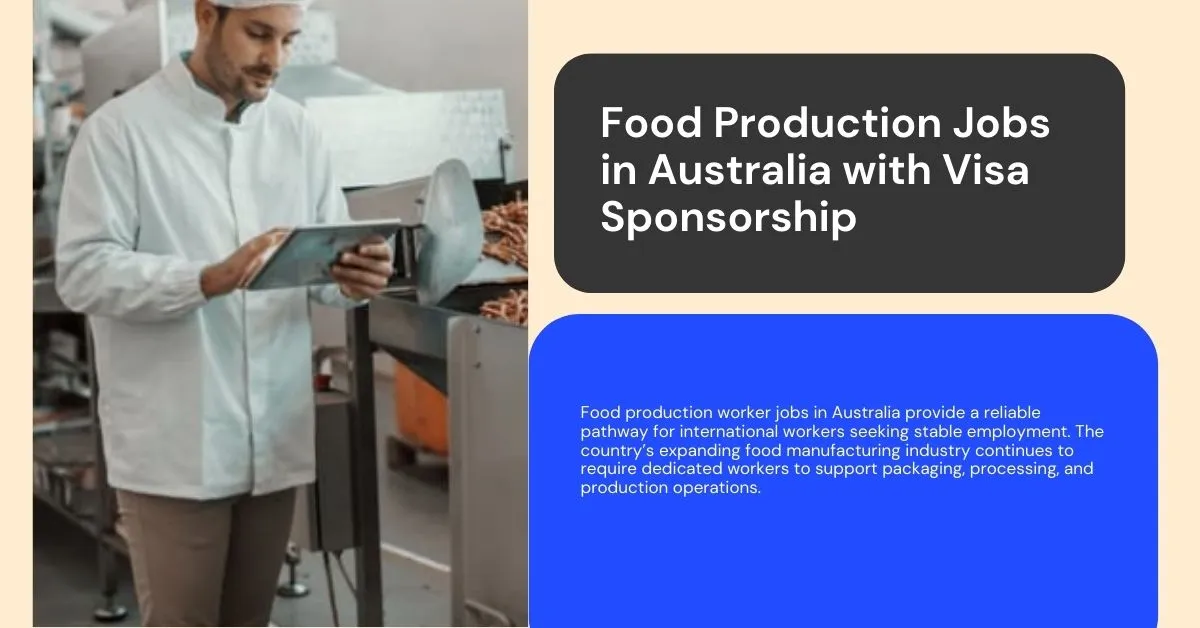
Food production worker jobs in Sydney offer entry-level opportunities for international workers seeking employment in Australia’s growing manufacturing sector. Many factories in food processing hubs such as Sydney, Melbourne, and Brisbane are recruiting foreign employees due to ongoing labor shortages.
One opportunity is available at a chocolate production facility located in Marsden Park, where workers support packaging lines, quality checks, and production operations. Hourly wage of AUD $23.
If you are exploring international manufacturing jobs with visa sponsorship, this guide explains the job details, requirements, salary, benefits, and how to apply.
What Do Food Production Workers Do in Australia?
Food production workers help maintain daily operations in factories that process and package food products. Their work ensures that items meet strict hygiene, safety, and quality standards required by the Food Standards Australia New Zealand.
Typical tasks include operating packaging equipment, preparing ingredients, labeling finished products, and maintaining hygiene across the production area.
Details of Food Production Jobs in Australia with Visa Sponsorship
Key Points
| Category | Details |
|---|---|
| Job Title | Food Production Worker |
| Country | Australia |
| Location | Sydney, NSW |
| Industry | Food Manufacturing |
| Job Type | Full-Time / Permanent |
| Experience | Not Mandatory |
| Education | Not Required |
| Visa Sponsorship | Available |
| Accommodation | Provided |
| Transport | Provided |
| Salary | Around AUD 23 per hour |
What Are the Requirements for Food Production Jobs?
Most food manufacturing employers hire entry-level candidates, but workers should meet several basic requirements.
- Basic English communication skills
- Ability to stand for 8–10 hours per shift
- Physical fitness for lifting and packaging tasks
- Willingness to work in fast-paced production environments
- Understanding of workplace hygiene and safety
- Attention to detail for product quality checks
- Eligibility for an Australian work visa
Previous factory or warehouse experience can improve your chances but is not mandatory.
What Are the Main Responsibilities?
Food production workers support several stages of the manufacturing process.
Typical duties include:
- Receiving and storing raw food materials
- Operating packaging or processing machinery
- Mixing ingredients following production guidelines
- Packing finished goods into boxes or containers
- Labeling cartons and preparing shipments
- Monitoring production temperatures and equipment
- Cleaning work areas and maintaining hygiene standards
- Reporting equipment faults or safety concerns
- Stacking cartons on pallets for storage or transport
These tasks help ensure smooth production and compliance with food safety regulations.
Benefits of Working in Australia’s Food Manufacturing Sector
Food production jobs in Australia offer several advantages for foreign workers.
Key benefits include:
- Employer-supported work visa sponsorship
- Hourly wages around AUD 23 per hour
- Accommodation support provided by some employers
- Transportation for commuting to the factory
- Medical insurance coverage (depending on employer policies)
- Long-term employment opportunities
- Performance bonuses and retention incentives
- Pension contributions and workplace safety equipment
These benefits make Australia an attractive destination for manufacturing workers seeking international employment.
Who Can Apply for These Jobs?
Food production worker jobs in Australia are open to applicants from many regions.
Common applicant countries include:
- Pakistan
- India
- Bangladesh
- Philippines
- Nepal
- Nigeria
- Kenya
- Ghana
- Indonesia
- Middle Eastern countries
Applicants from other nationalities may also be considered depending on visa eligibility and employer recruitment needs.
Salary: How Much Do Food Production Workers Earn?
The average starting wage is about AUD 23 per hour, which equals approximately AUD 3,600–4,000 per month depending on working hours.
Additional earnings may include:
- Overtime pay
- Production bonuses
- Performance incentives
- Long-term contracts
According to the Australian Bureau of Statistics, manufacturing wages remain competitive due to strong demand for workers in production and logistics sectors.
How to Apply for Food Production Worker Jobs in Australia
Follow these steps to apply for food manufacturing jobs in Australia:
1. Prepare Your Resume
Highlight any experience related to factory work, packaging, logistics, or manual labor.
2. Search for Visa-Sponsored Jobs
Look for companies offering visa sponsorship in food manufacturing roles.
3. Submit Required Documents
Employers typically request:
- Passport copy
- Updated CV
- Educational certificates (if available)
4. Attend Interviews
Some companies conduct online interviews or screening assessments.
5. Visa Sponsorship Process
Once selected, the employer begins the Australian work visa sponsorship procedure.
6. Travel and Start Work
After visa approval, you can travel to Australia and begin employment.
Conclusion
Food production worker jobs in Sydney offer a practical entry point for international workers seeking employment in Australia’s manufacturing sector. With visa sponsorship opportunities, stable hourly wages, and additional benefits, these roles provide a reliable pathway to gaining international work experience.
For motivated candidates willing to work in a factory environment, Australia’s growing food manufacturing industry can be a valuable step toward building a global career.
Frequently Asked Questions
1. Can foreigners apply for food production worker jobs in Australia?
Yes. Many food manufacturing companies hire international workers and may offer visa sponsorship depending on labor shortages and eligibility requirements.
2. What is the average salary for food production workers in Australia?
Most entry-level food production workers earn around AUD 23 per hour, with opportunities for overtime pay, bonuses, and shift allowances.
3. Do I need experience to work in food production in Australia?
No extensive experience is required. Many roles are entry-level and provide on-the-job training, although prior factory or packaging experience can be helpful.